I've said this before, but I'll say it again. I have been enjoying this project immensely, in part, because it has made me go back and rediscover forgotten gems, or in a few cases, give a closer listen to something and really discover its greatness for the first time. I have been having a blast putting this together. Perhaps that explains the rather brisk pace. On the other side of the coin, it has forced me to re-evaluate some records and some that off the top of my head I would have said belong, I have ended up demoting to lesser stars upon closer listens. Of course, as it has gone along, I have regretted not putting a handful on there. So I will have a "clean up" post at the end, where I list a few records that I should have included but who's letters have already gone by. Feel free to strongly lobby for something (as ANCIANT has done recently for Sting's ...Nothing Like the Sun) to make the clean up post).
T. Rex – Electric Warrior (1971): No offense to you Bowie fans out there, but is this the definitive glam record? I think so.
Talking Heads – Stop Making Sense (live) (1984/1999): I know this release is somewhat frowned upon by Talking Heads fans, but I have always loved it and find it to be a fine (and wonderful sounding) overview of their most popular period, and the show unfolds in an interesting way, slowly expanding the sound song after song. (Note: I consider the 1999 remastered, expanded release to be the definitive version, as it includes all of the songs from the 1984 film and is the real, complete show).
Tears For Fears – Songs From the Big Chair (1985): 80’s defining tracks like “Shout,” “Everybody Wants To Rule the World” and “Head Over Heels” might disguise the fact that this is an ambitious pop/rock album that would sound fantastic in any era. (Note: the expanded edition is worthwhile, not only is the remastering job fantastic, but a second disc contains some experimental b-sides from the era and the remixes of songs from the album).
Television – Marquee Moon (1977): One of those definitive New Wave landmark records, but it doesn’t really sound too New Wave, honestly, due to the sizzling guitar interplay between Tom Verlaine and Richard Lloyd.
Richard and Linda Thompson – Shoot Out the Lights (1982): Recorded and released as their marriage was crumbling, SOTL is the perfect record about love and loss, and of course it features the usual stellar guitar work from Richard.
Richard Thompson – ‘Grizzly Man’ original motion picture soundtrack (2005): On rare occasions, a film’s soundtrack is so good that it can stand alone as a beautiful piece of work, and Thompson’s haunting score for Werner Herzog’s fascinating documentary about grizzly bear nut Timothy Treadwell is one such soundtrack, where his music captures the wonder, beauty, darkness and danger of the film.
Pete Townshend – All the Best Cowboys Have Chinese Eyes (1982): Pete claims that he was so strung out during this period that he has no recollection of recording this album; too bad, because it is his most interesting (and at times impenetrable) set of lyrics, and the music has a subtle and nice flow to it; it is clear when you compare this and Empty Glass to the Who records coming out at the same time that he was saving his best material for himself.
Traffic – The Low Spark of High-Heeled Boys (1971): Once Dave Mason left (or was pushed out, depending on who you believe), Traffic became Steve Winwood’s band, and as such moved into more jazzy, improvisational territory, especially with the remarkable epic title track, but Jim Capaldi’s contributions (“Rock and Roll Stew” and “Light Up Or Leave Me Alone”) made sure there were still a few straight rock songs in the mix.
The Tragically Hip – Up To Here (1989): Canada’s best band (sorry Rush fans) got the closest to breaking through in the U.S. mainstream with their debut (they had already released an EP only in Canada that is worth hunting down for Hip fanatics), a fine mix of snarling rockers and acoustic gems highlighted by Gordon Downie’s shaky delivery and fascinating stream of consciousness lyrics.
The Tragically Hip – Road Apples (1991): This is The Hip’s hardest hitting rock album and my personal favorite in their discography, it is also a favorite amongst Hip fans in the Great White North.
The Tragically Hip – Fully Completely (1992): Considered to be their best record by many (although does suffer from some production deficiencies that the band consider severe), quite a few of these tracks were Canadian radio hits.
David Troy – It Will Be (1989): This entry is for all of the unsung musicians who are out there creating great music, but for whatever reasons, never make it beyond the local or regional scene; I saw this guy and his band up in Colorado on one of my many trips with Johannes, they gave a great show, and I still pop in their promo tape I bought at the show. These are great songs and this guy should have gone places, like so many out there.
ABOVE: Traffic is one of those bands (and there are many others) that I really like, despite making only one appearance on this list. They rarely put together a classic record from start to finish, but most of their records included some stellar tunes. Traffic had an interesting evolution. On the first couple of records, Steve Winwood and Dave Mason struggled with eachother for the sound and leadership, making those records a bit interesting and diverse. Once Mason was out, Winwood's Traffic went into a more daring, jazz-influenced, improvisation phase.
Sunday, May 13, 2012
Saturday, May 12, 2012
Round 2 NBA Playoff Predictions
I hate it when they start the second round while there are still round 1 series to be decided. But I need to get my predictions up now since the round 2 games start later today.
So first, I guess I should predict the outcomes of the two Game 7's today and tomorrow. Due to the injuries of Blake Griffin and Chris Paul (although both are still playing), and the overall tenacity and nastiness of The Grizzlies, I've got to give The Griz the series. Plus, it's the Clippers.
As far as that other L.A. team, what are they called again? Oh yeah, The Lakers. Denver has fought mightily to bring it to a Game 7, but I've got to think that experience, Kobe's competitiveness and the return of Metta Ron World Artest Peace take over and The lakers make it through.
So how did I do in Round 1, assuming my Game 7 predictions are also true? If my predictions here come to pass, I will be 6-2 on predicting the outcomes, and I also predicted the Heat sweep.
On to Round 2...
Spurs vs. Grizzles: As great as The Spurs are, I shudder at the thought of facing the Grizzles again. Recall last season, The Spurs were also a one seed and the Grizz were 8. They met in the first round, and the Grizzlies defeated them, in large part due to an advantage in the paint. The Grizzlies still have that advantage. But, Ginobili was hurt and this is a much better Spurs team than last season. It will be a tough fought series, but the Spurs win this time. Spurs in 6. (And if their opponent turns out to be The Clippers, I would still give it to the Spurs in 6).
Thunder vs. Lakers: I think the time has passed for The Lakers (at least in this configuration) and the time has arrived for The Thunder. Thunder in 6. (And if the opponent turns out to be Denver, then Thunder in 5).
Heat vs. Pacers: The Pacers are one of those lower seeds that nobody wants to face in a series. Still, Miami's path to The Finals is fairly clear now that the hobbled Bulls are out of the picture. Heat in 6 (The Pacers will genuinely win one and The Heat will give one away because that is what they do in each series they play).
Celtics vs. 76ers: The 76ers just aren't a good team. They beat a Bulls team that had lost its two best players and its mojo. Celtics in 5.
Thoughts?
Thursday, May 10, 2012
Dez's 5 Star Albums: Part 2 of the S's
Springsteen used to be the end-all, be-all of rock music for me. At his best, he inspired such fierce loyalty and belief. Seeing him live during his heyday was an event, not just a concert. It was something people planned for, something you would drive several states to attend. He still gives a great show, but not like that anymore, not like his very life depends on it. As with all rock heroes who age, he couldn’t stay at that summit forever. His classic period, from 1973-85 (the two albums from that period not listed below, The River and Nebraska, were both solid 4 star releases) was nearly unmatched for quality in rock and roll. After the juggernaut of Born in the U.S.A., he almost had to come crashing back down to earth, and he did. Since then, he has put out some good albums and some great songs, but nothing to really match that 12 year streak.
Bruce Springsteen – Greetings From Asbury Park, NJ (1973): Bruce’s debut is a burst of pent up energy as songs so verbose that the lyrics practically tumble over each other come one after the other; it is also interesting/fun because he had not settled on his persona (not even an early one) yet.
Bruce Springsteen – The Wild, The Innocent & the E Street Shuffle (1974): This is the studio record that best captures the loose, jazzy spirit of Bruce’s early club shows (a key is that the personnel of his early band swung harder than the eventual E Street Band could), featuring epic favorites like “Rosalita (Come Out Tonight)” and “Incident on 57th Street”; my favorite Springsteen record.
Bruce Springsteen – Born To Run (1975): Bruce’s third outing landed him on the covers of Time and Newsweek in the same week, he went for broke and tried to make something truly epic, and it worked, the legend was born.
Bruce Springsteen & the E Street Band – Hammersmith Odeon, London ’75 (live) (1975/2006): Long a favorite show of bootleggers until it was given an official release in ‘06, Bruce’s first overseas show finds him playing with breakneck desperation in a make or break performance, highlighted by an 18-minute romp through the jazzy “Kitty’s Back” (from his great second record).
Bruce Springsteen – Darkness on the Edge of Town (1978): In stark contrast to what came before, Springsteen strips everything down to raw essentials, tossing aside the epic escape fantasies of Born To Run and instead turns his attention for the first time to those who can’t or won’t run away, exploring working class frustrations and realities in what may be his most powerful set of songs.
Bruce Springsteen – Born in the U.S.A. (1984): Bruce was big before, but this record put him on a superstar level with the elite of rock history, featuring an impressive seven hit singles, it is the most commercial, concise and catchiest album of his career.
Stephen Stills – Stills Live (live) (1975): Recorded near the end of his peak period before a sharp decline in his songwriting and skills, it is great that Stills chose to release a live record when he did, one neatly divided evenly between a somewhat sloppy but spirited electric side and an often stunning acoustic side.
Sting – Dream of the Blue Turtles (1985): I admire Sting’s decision to make a sharp break in style once he left The Police, his solo debut features a jazz all-star band backing him, and his decision to use these jazz musicians on a pop/rock record results in often interesting and exciting moments.
Sting – The Soul Cages (1991): Sting’s solo career started off very strong, but this was the last great record of his before he put on the cruise control and decided to take less risks, it did not do well commercially but it is a lovely if somber affair ruminating on the recent death of his father and other such happy things.
The Stone Roses – The Stone Roses (1989): Sometimes those stars that shine the brightest burn out the fastest, and such is the case with this band whose debut announced a resurgence in British rock music; the resurgence did occur, but the band that was as responsible as anyone for starting it imploded soon after without reaping the rewards of the renaissance they helped inspire.
(Iggy and) The Stooges – Raw Power (1973): While maintaining that, err, raw power that made The Stooges the godfathers of punk, their third release shows just enough progression and structure to make RP an interesting step forward.
The Streets – Original Pirate Material (2002): Once you get beyond the novelty of a white British rapper (Mike Skinner) and dig into these tunes, you will find ruminations on modern daily life for an average English bloke that can be alternatively funny and often profound.
Strength in Numbers – The Telluride Sessions (1989): This one-off release by a supergroup of Newgrass virtuosos (Bela Fleck, Jerry Douglas, Sam Bush, Tony Rice, Edgar Meyer) is intriguing precisely because none of these songs are really bluegrass songs, but intricate compositions that are impossible to categorize and that just happen to be played on traditional bluegrass instruments.
The Subdudes – The Subdudes(1989): The ‘Dudes’s unique instrumentation (especially using miked tambourines for percussion) and breezy sound perfectly evoke their hometown of New Orleans’s easy manner, open mind and open heart and the handling of life’s trials and travails with dignity and an upbeat spirit.
ABOVE: The members of Strength in Numbers constitute the vanguard of a pretty remarkable resurgence in bluegrass / roots music that started in the late 80’s. If you follow the music of each of these guys individually or in their various collaborations, they generally go way beyond the traditional and experiment within all types of genres. Bela Fleck (with his Flecktones) has found the most success, but all are worth exploring. On a personal note, the Strength in Numbers record is what first introduced me to Fleck and these others. If not for this record, I would have never agreed with Johannes that we should attend that Bela Fleck show one summer evening in 1992, and how my musical tastes would have been different had we not attended that remarkable show. It was one of those few shows that alter one’s whole musical perspective.
Monday, May 7, 2012
Dez's 5 Star Albums: The S's, Pt. 1
The S's are probably my lengthiest letter, so it will be split into two still lengthy posts. I'm moving Springsteen slightly out of order, since I would have to split his entries between the two posts if I had stayed strictly alphabetical. I like to keep the artists together within a single post.
Raphael Saadiq - Stone Rollin' (2011): A modern soul/funk classic that has a joyful bounce reminiscent of prime Sly Stone.
Santana - Santana III (1971): Out of the 463 people who have come through Carlos Santana's band, this line-up is the most exciting, featuring a worthy guitar foil to Carlos in Neal Schon and also featuring organist/vocalist Greg Rollie, both of whom would soon leave to form Journey.
Santana - Caravanerai (1972): Often overlooked but bold fusion record that alternates between In a Silent Way-like calm and burning rock improvisation.
Joe Satriani - Satriani Live! (2006): Out of all of the guitar technician noodler wankers (that's a technical term), Satch is the one who matches his stunning technique with great writing and melodies that you might actually want to listen to.
Paul Simon - Graceland (1986): Simon wasn't the first Western pop star to experiment with world music, but his smash record Graceland opened a lot of Western ears to new sounds by marrying infectious African pop with his usual set of masterful compositions.
Simon & Garfunkel - Sounds of Silence (1966): Pop folk just doesn't get any more beautiful or pure than this.
Smashing Pumpkins - Siamese Dream (1993): Billy Corgan's mix of melodic, melancholy songs with his wall of sound prog rock/psychedelic noise stood out in sharp contrast to the back to basics grunge movement of the time.
The Smiths - The Queen Is Dead (1986): While justifiably known primarily as one of the greatest singles bands of the 80's, TQID showed that Morrissey and Marr were also capable of making thrilling, cohesive records.
Alexander 'Skip' Spence - Oar (1969): What makes 60's acid casualty Skip Spence's (of Jefferson Airplane and Moby Grape) only solo record so fascinating, beautiful and gripping is his immense talent still barely gets him through in these haunting, fragile songs / fragments recorded completely solo and just after Spence had been discharged from the mental ward.
Spinal Tap - 'This Is Spinal Tap' original motion picture soundtrack (1984): Yes, they were a joke band created for the brilliant film, but part of what makes the film so great and so damn funny is that these great parodies of hard rock / metal c*ck rock fit so comfortably (and affectionately) next to the real thing (try the "KISS lyric or Spinal Tap lyric" game sometime to see what I mean).
Dusty Springfield - Dusty in Memphis (1969): Taking the British perfectionist torch singer out of her comfort zone and making her record a soul record almost against her will, due to almost crippling insecurities, turned out to be an inspired move, to say the least.
Steely Dan - Can't Buy a Thrill (1972): Steely Dan was strong straight out of the gate, with this debut featuring classics like "Do It Again" and "Reelin' in the Years" (with some of the tastiest guitar work of the 70's), as well as personal Dan favorites like "Dirty Work" and "Kings."
Steely Dan - Countdown to Ecstasy (1973): While all of their 70's records up through Aja deserve recognition, I guess I prefer the earlier days when they were still a real band vs. a studio laboratory for Fagan and Becker.
Rod Stewart - Every Picture Tells a Story (1971): It is a shame if all you remember about Rod is cheesy late 70's schlock or lazy interpretations of standards, because there was a time when he was a gritty roots rocker destined for greatness (with a huge assist from Ron Wood).
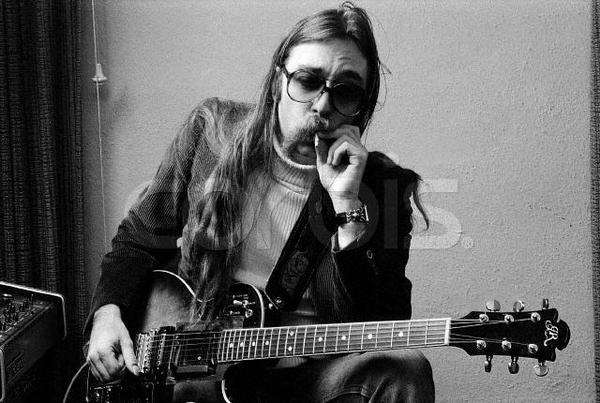
ABOVE: Not only was Jeff "Skunk" Baxter a member of Steely Dan for their first three albums and later a member of The Doobie Brothers (he looks like a Doobie, doesn't he?), but he was also an in demand session guitarist. Baxter currently chairs a congressional advisory board on missile defense, and he has high level security clearance and consults for the Defense Department and the CIA. Really.
Friday, May 4, 2012
Biden Is Safe
The treasure trove of intelligence gained from our killing of Osama Bin Laden has been immense. I've been reading some of the articles about what has been released thus far for public consumption, and one thing I particularly enjoyed was Bin Laden's assessment of our vice-president. In one of the many letters from Bin Laden to his associates, he discussed how president Obama and Gen. Petraeus should be assassinated on one of their visits to Afghanistan. But vice-president Biden was not to be touched. Why? Because in Bin Laden's words, Biden "is totally unprepared for that post [the presidency]," and that if Biden were to take over for a slain Obama, it would "lead the U.S. into a crisis."
ABOVE: If Biden takes over, the terrorists win
Wednesday, May 2, 2012
Dez's 5 Star Records: The R's, part 2
If you have been reading this list all along, you now know my personal answer to the age old question: Beatles or The Stones? The Beatles were the most important rock and roll band, I know that. But I think that The Rolling Stones were/are the Greatest (although not my favorite). From the beginning, they embodied the danger and decadence that makes rock and roll so seductive. Mick Jagger and Keith Richards are absolutely ruthless in so many ways. Keith did more drugs and harder drugs than anybody. Jim Morrison, Jimi Hendrix, Janis Joplin…you can list all of the casualties of the era, but Keith outlasts them all with a sheepish grin on his face. Gram Parsons had a Stones fixation and partied hard with Keith, but Gram didn’t make it. Anyone who works with The Glimmer Twins understands the hierarchy. Keith and Mick may hate each other, but they stand united against anyone else. It may have started out as Brian Jones’s band, but Keith and Mick took control because they could write the songs. When Mick Taylor rightfully demanded writing credit on the songs he contributed to during the Stones’s peak period, the best guitarist the Stones ever had met the Jagger/Richards brick wall and had to leave. Keith Richards is the coolest, baddest cat in all of rock and roll because above all he has survived while he has been on everyone’s Death Watch shortlist since the 60’s. Mick Jagger is one of the most iconic rock stars, yet nobody can really give you any insight into who he really is (as Keith once said, “Mick doesn’t have any real friends”). Who that guy is underneath the prancing, preening cock of the walk is a complete mystery to fans, critics, bandmates and ex-wives. Keith and Mick are more rock and roll than anyone before or since, mostly because they are absolutely f***ing ruthless.
The Replacements – Let It Be (1984): I place Paul Westerberg and his band on the same level as Big Star in many ways (“Alex Chilton” was a hero of Westerberg’s), a band that remained a cult act during its existence but whose reputation has justifiably grown and grown as the years go by; Westerberg’s weary voice would not win on American Idol, but expresses more than any of those pop tarts could possibly comprehend.
The Replacements – Don’t Tell a Soul (1989): The ‘Mats faithful see this album as the point where everything started to go wrong, but if you listen to much of Westerberg’s solo career, this more carefully crafted pop sound seems to be really where his heart is, and I love the slicker pop tunes with his contrasting rugged voice still slicing through them.
Robbie Robertson – Robbie Robertson (1987): What I admire most about Robbie’s solo career is that although he may lyrically mine some of the same territory as his Band days, it is about as complete a break from his past musically as is possible, with carefully constructed songs featuring meticulously produced synthesizers and layered guitars more akin to Peter Gabriel or U2 (who both appear on this record, by the way) than Music From Big Pink.
The Rolling Stones – Beggar’s Banquet (1968): Where the Stones stop trying to ape the blues of others and create some of their own.
The Rolling Stones – Let It Bleed (1969): Imagine an album opening with “Gimme Shelter” and closing with “You Can’t Always Get What You Want,” and then the meat in between is just as tasty.
The Rolling Stones – Get Yer Ya-Ya’s Out (live) (1970): A sloppy, brilliant, gritty mess from their peak period; all other live Stones albums should be used as coasters.
The Rolling Stones – Sticky Fingers (1971): The excess and lifestyle finally catches up to them and they sound incredibly weary here, making this the most arresting record of their career and my personal favorite of theirs.
The Rolling Stones – Exile on Main Street (1972): At a time and in an environment that should have resulted in a sprawling, unfocused, double record mess The Stones create a sprawling, unfocused, double record mess that is generally acknowledged as one of the greatest rock records ever made, while sounding like it was recorded in a gutter.
The Rolling Stones – Some Girls (1978): With Keith facing another possible jail sentence due to his continuing heroin habit, Mick takes the leadership reins and feeding off the musical energy of NYC in the late 70’s (punk, disco and New Wave), he helps the Stones take in all of those trends and creates the last great Rolling Stones record (although some good ones, like Tattoo You and Undercover, would come later).
Rush – Moving Pictures (1981): I know this is the Rush album that even non-Rush fans like, but come on, it is so great (just the opening synth/drum line of “Tom Sawyer” is iconic); I appreciate quite a bit of Rush actually (notwithstanding Geddy Lee’s vocals), but they just don’t get any better than this, where they make musical precision sound almost soulful.
ABOVE: After the prodigious amounts of drugs and fast living, one of the closest brushes with death for Keith Richards of The Rolling Stones was in 2006 when he fell out of a coconut tree in Fiji and cracked his skull.
Tuesday, May 1, 2012
Dez's 5 Star Albums: The R's, part I
I have one of my few soul selections in this batch. Echoing a point I have made before, the lack of soul albums does not reflect a dislike of the genre. To the contrary, I am a big fan of Sam Cooke, Smokey Robinson, Temptations, Otis, etc. As with many blues artists of that and previous eras, though, they were more about singles than cohesive albums. This list focuses on the album.
Radiohead – The Bends (1995): Before the much lauded experimentation, Radiohead released a kick ass rock record that echoed bands from the past but also featured a fiercely unique vision.
Radiohead – OK Computer (1997): The orgasmic critical and fan reaction to this was a bit overwhelming and created some backlash (at least from me), but enough time has passed to where I can listen to it without the surrounding hype and hear much that is great; although to be honest, I still more admire OKC than love it.
Radiohead – Kid A (2000): I like Amnesiac about as much as Kid A, but I’ll give the edge to Kid A since it has a more unified sound and it had the bigger impact coming first. NOTE: Even Thom Yorke has said that Kid A and Amnesiac should have been released together as a double. I agree. I view them as pieces of one work.
Red Hot Chili Peppers – By the Way (2002): How this band has progressed and grown over the years is quite impressive, BTW represents the peak of their songwriting and exciting sonic explorations.
Otis Redding – Otis Blue (1965): Sam Cooke was the greatest soul singer, but Otis was my favorite; this may be the best soul record ever made, Otis uses his gritty Southern-Stax sound on a mix of brilliant originals and outstanding covers (including three from Cooke[Otis absolutely owns “Shake”] and even one from the Rolling Stones).
Lou Reed – Transformer (1972): Lou’s best album features wonderful shots of glam, but also solid pop songs with subversive lyrics (listen closely to unlikely hit “Walk on the Wild Side”) and moments of real beauty (“Perfect Day.”)
Lou Reed – Rock and Roll Animal (live) (1974): Lou has mostly been willfully perverse in his strange career moves over the decades and often alienating albums, but here he decides to give the people what they want with a bruising, rocking live album highlighted by the glittering, glam guitar work of Steve Hunter and Dick Wagner.
REM – Out of Time (1991): I don’t even like “Losing My Religion,” but the rest alternates between great pop music and moody pieces that all work.
REM – New Adventures in Hi-Fi (1996): I don’t know why this record made so little impact when it came out, but I stand by it as one of REM’s most complete records that shows all of their latter day strengths; also notable as the last record as a four piece and the last album before they started to suck.
ABOVE: Lou Reed makes my five star list, but Lou is also notable for creating what many critics consider to be the worst record of all time, 1975's Metal Machine Music. It is an album of modulated feedback and tape hiss. It was seen as a joke or a "F you" from Lou at the time, but of course, it has been reassessed by some as a revolutionary birth of industrial music. And it's a double. I own it, of course. It's bad.
Subscribe to:
Posts (Atom)