ABOVE: This is a louse
This little bastard has been the bane of my existence for the past week or so. We got a phone call from my oldest daughter’s daycare informing us that she had lice and that we needed to pick her up. My wife immediately went into crisis mode, and it felt like we were trying to contain an outbreak of the next killer virus.
We have spent several hundred dollars so far on different remedies and special combs and brushes. Tomorrow my wife will meet with a "lice specialist" for a 98% guaranteed delousing. One website stated that the average family spends close to $800 to get rid of these f***ers. They are tiny little creatures, and leave little white eggs in your hair that resemble, to me, dandruff. My daughter had quite a few eggs. When we picked her up at daycare she cheerfully told us that she had “bugs and eggs” on her head. She had a little friend who had it too. I am sure that the little friend was the source.
So, at night we have been washing every towel, bed sheet, blanket or piece of clothing. I have vacuumed the entire house, sofa, chairs about three times. You have to get these fine combs and spend about an hour going over every inch of the infected head to pick out these eggs. Then you have to use radioactive chemicals in your hair to kill the lice. Got to hand it to the wife, though. I don’t think the UN was this organized in the Balkans in the 90’s.
The problem is that it is easy to reinfect. Someone gets clean, but then someone else in the house gets infected. Then they reinfect the cleaned person. Etc. Etc. Etc. Etc. My daughter, my wife and I all got them. They don’t really harm you, they just itch. Fortunately, my youngest daughter doesn’t have them because she has very little hair. Which brings me to…
Last night my wife instructed me that we should take me “out of the equation.” What that means, she calmly told me, was that I should shave my head. Like Mr. Clean. Like Telly Savalas. Like Yul Brenner. Because I’m a man, she explained, this is not a big deal.
ABOVE: Apparently my wife wouldn't mind being married to Kojak.
I told her I would go get a haircut, and she said that I at least needed to get a buzz cut, like I was some new recruit. I got a really short, but nice looking haircut and then returned home. This was not near enough. I was not helping the family, I was told. Why didn’t I care about helping the family?! So I went back out, but to a different barber, and asked for the real deal. I did not want to tell her it was for lice, so I made up a story about losing a bet on the recent Cowboys game. “You’re a Cowboys fan?” “Oh no. I bet that Denver would beat them by more than they did. I despise the Cowboys.” I made up an intricate story about gambling on football, explained spreads, betting haircuts, etc. She greatly admired me for keeping my word. So then I returned home for the second time that evening, with my second haircut and almost $50 later. I now have a buzz cut. I am now “out of the equation.” As I am sure she was instructed to do by her mother, my daughter said “Daddy, I like your new haircut.” Great, I don’t.
ABOVE: Did you know that buzz cuts were first used in the military to prevent lice?
My students were a bit stunned when I went to work today. I told them I was getting ready for summer. Anyway, I am told it takes about a month to completely delouse a household. Although, as of last night my daughter didn’t seem to have any. When I dropped her off at school this morning, her little lice-friend ran up to her and gave her a big hug. Awesome.
Thursday, October 10, 2013
Monday, September 30, 2013
I Did It For Me
Spoiler alert: this post discusses the “Breaking Bad” finale from last night.
Refer to my previous post regarding series finales in general, and last night’s “Breaking Bad” finale was a textbook example of how it should be done. I should not have doubted creator Vince Gilligan and co. Even great shows usually dip here and there, even “The Wire.” What has been remarkable about “Breaking Bad” is that over the course of five seasons, there have been no dips in quality or storytelling. The vision always intact, the story and character arc of Bryan Cranston’s Walter White inexorably marched forward to his tragic yet satisfying end. The “Breaking Bad” finale was satisfying at almost every level. And in the dark world of “Bad,” it could even be considered a happy ending.
In my previous post, I compared some shows that were left open ended (“The Sopranos,” “The Wire”) to others that tried to tie everything up (“Big Love,” “Dexter”) Tying everything up was harder to pull off, and usually failed. What Gilligan was able to do was really tie up most of “Breaking Bad,” where each character got payoff or pay back, essentially got what they deserved in a most satisfying manner.
Walt, of course, is dead. There was no other way. Even if he got out of the biz cleanly, the cancer was going to take him anyway. That gave him a certain amount of freedom to take sweet vengeance. But it did not take the easy path of Eastwood-like Armageddon (like, say, a “High Plains Drifter”…Gilligan always said he viewed “Breaking Bad” as essentially a western). Jesse was not only able to take revenge on the sociopath Todd (how satisfying was that after all that Todd had put Jesse through!), he was also set free and saved by none other than Walt himself. The simple, wordless glance and nod between the two men spoke volumes and made everything OK between them. Jesse has a chance, and he certainly deserves one, as he was really the conscience of the show. I had predicted that Jesse would kill Walt, but how they actually ended it was much more satisfying to me. As Walt was “the one who knocks,” it makes sense that the only person that would kill Walt would be Walt himself (throwing himself on top of Jesse and taking the bullet to shield him from the ingenious trunk gun he had constructed to take out Jack and his minions.)
As much as the viewer relished the bloodbath of the finale, in typical “Bad” fashion, the most stunning scene was the brief, clandestine conversation between Walt and the long suffering Skyler. He had lied to everyone (including himself) from the very beginning. “If you tell me one more time that you did this for the family…” “I did it for me. I enjoyed it. I was good at it. I felt alive.” Finally came Walt’s most honest moment of the entire series. Circumstances were excuses, in that moment Walt admitted to Skyler and to himself, he chose to be bad (to be “Heisenberg”), because he wanted to do it. The fact that he could potentially leave millions of dollars for his family was mere justification, but in reality it was not the reason (at least after the first season). That was great, great stuff.
What was most impressive about what Gilligan accomplished in this final episode was that he gave us payoff and delivered what we wanted, yet it was still uncompromising and moving and great television. Walt’s family will be (most likely) taken care of, he exacted sweet revenge on those who had wronged him, he set Jesse free and he was able to go out where he was happiest – in a meth lab set up to his specifications.
ABOVE: After 5 seasons, Walt and Jesse came to an uneasy peace. While they were the main characters, what made "Breaking Bad" so rich were the supporting characters, like Mike, Gus, Hank, Saul...and of course, Skinny Pete and Badger
So ends one of the greatest shows ever grace the small screen.
Refer to my previous post regarding series finales in general, and last night’s “Breaking Bad” finale was a textbook example of how it should be done. I should not have doubted creator Vince Gilligan and co. Even great shows usually dip here and there, even “The Wire.” What has been remarkable about “Breaking Bad” is that over the course of five seasons, there have been no dips in quality or storytelling. The vision always intact, the story and character arc of Bryan Cranston’s Walter White inexorably marched forward to his tragic yet satisfying end. The “Breaking Bad” finale was satisfying at almost every level. And in the dark world of “Bad,” it could even be considered a happy ending.
In my previous post, I compared some shows that were left open ended (“The Sopranos,” “The Wire”) to others that tried to tie everything up (“Big Love,” “Dexter”) Tying everything up was harder to pull off, and usually failed. What Gilligan was able to do was really tie up most of “Breaking Bad,” where each character got payoff or pay back, essentially got what they deserved in a most satisfying manner.
Walt, of course, is dead. There was no other way. Even if he got out of the biz cleanly, the cancer was going to take him anyway. That gave him a certain amount of freedom to take sweet vengeance. But it did not take the easy path of Eastwood-like Armageddon (like, say, a “High Plains Drifter”…Gilligan always said he viewed “Breaking Bad” as essentially a western). Jesse was not only able to take revenge on the sociopath Todd (how satisfying was that after all that Todd had put Jesse through!), he was also set free and saved by none other than Walt himself. The simple, wordless glance and nod between the two men spoke volumes and made everything OK between them. Jesse has a chance, and he certainly deserves one, as he was really the conscience of the show. I had predicted that Jesse would kill Walt, but how they actually ended it was much more satisfying to me. As Walt was “the one who knocks,” it makes sense that the only person that would kill Walt would be Walt himself (throwing himself on top of Jesse and taking the bullet to shield him from the ingenious trunk gun he had constructed to take out Jack and his minions.)
As much as the viewer relished the bloodbath of the finale, in typical “Bad” fashion, the most stunning scene was the brief, clandestine conversation between Walt and the long suffering Skyler. He had lied to everyone (including himself) from the very beginning. “If you tell me one more time that you did this for the family…” “I did it for me. I enjoyed it. I was good at it. I felt alive.” Finally came Walt’s most honest moment of the entire series. Circumstances were excuses, in that moment Walt admitted to Skyler and to himself, he chose to be bad (to be “Heisenberg”), because he wanted to do it. The fact that he could potentially leave millions of dollars for his family was mere justification, but in reality it was not the reason (at least after the first season). That was great, great stuff.
What was most impressive about what Gilligan accomplished in this final episode was that he gave us payoff and delivered what we wanted, yet it was still uncompromising and moving and great television. Walt’s family will be (most likely) taken care of, he exacted sweet revenge on those who had wronged him, he set Jesse free and he was able to go out where he was happiest – in a meth lab set up to his specifications.
ABOVE: After 5 seasons, Walt and Jesse came to an uneasy peace. While they were the main characters, what made "Breaking Bad" so rich were the supporting characters, like Mike, Gus, Hank, Saul...and of course, Skinny Pete and Badger
So ends one of the greatest shows ever grace the small screen.
Wednesday, September 25, 2013
All Good Things Must End
NOTE: Spoiler alert. This post addresses TV series finales. If you are not caught up with or plan to watch Dexter, Breaking Bad, The Wire, The Sopranos, Big Love or M*A*S*H, then you may want to skip parts of this post. I will bold the show titles, so you can see where I am coming to particular shows and then you can skip that paragraph, or skim over parts of it.
After watching the pretty horrible "Dexter" series finale last Sunday, and as I prepare for the end of "Breaking Bad" this Sunday, I started thinking about the nature of finales in general. I agree that we are in the midst of a golden age for television. Where much of the film world is stalled out in superhero sequels, tired remakes and the like, television has been blown wide open with cable channels putting their resources into series television. HBO, Showtime, AMC and others can go to places that the old networks never could (or would). But the art of a successful, satisfying and even surprising finale is still elusive.
You can't please everyone. Some people wanted Dexter to die for his sins, others wanted him to be able to turn his back on his serial killer urges and finally find happiness with his family and a "normal" life. But the lumberjack coda just made no sense at all, and almost all fans, however you wanted Dexter to end up, were not pleased with what happened. It would have even been better if they had faded to black as he drove his boat into the hurricane, as opposed to tacking on...that. I guess they left some ambiguity there, but what bothered so many viewers was that it just did not make sense, considering the journey the character had taken, it wasn't consistent with who he had become.
ABOVE: Dexter is now a lumberjack and left his son in the hands of another serial killer. Makes sense.
For television, it is even more difficult that coming up with a good ending for a film. Generally, films are self-contained stories that demand a beginning, middle and end. Endings are expected in films. But as television viewers, we have gotten used to it being open ended, to looking forward, year after year, to the next season. When they do decide to end a series, as a loyal viewer, there may be some anger and resentment there. I mean, a movie has to end. A TV series can go on and on, depending on ratings and financing. It is often a creative decision on when a series needs to end. "Dexter," for instance, went on about three seasons too long. It got repetitive, characters had gone as far as they should go seasons ago. They never recovered from having to top the brilliant John Lithgow season.
"The Sopranos" finale upset a lot of people. I didn't like it when it aired, but as time has passed, I find it more satisfying. The last scene was masterfully shot, where it could be a completely banal family meal made tense only by the viewer's imagination and knowledge of what had come before, as well as the expectation of "this is the last scene, something amazing must happen!" Creator David Chase was playing on all of that. Or, Tony really could have been moments away from being whacked. Without taking a stand either way, Chase let you decide what you wanted to happen when it went to black. Was that Tony dying from a gunshot wound and the world going to black? Did the producers run out of film? Did the cable go out? It was great, kind of like the old Choose Your Own Adventure books. Chase was almost like, "screw it, you decide what happened."
ABOVE: Is Tony looking down the barrel of a gun? Is he watching the waitress bring his pasta? We don't know, and I've decided that's great. This is the last shot of "The Sopranos" before it goes to black.
Or you could go the way of "The Wire," where other than McNulty and Freamon being forced into retirement (which, by the way, was not a bad thing for either character), the message of the end of "The Wire" was that things will go on in the streets and in the halls of power of Baltimore much as they had before. Maybe different faces, but same story. Depressing and futile for all of these great characters, to be sure (although Bubbles got to a better place), but true to the show. It almost had to be that way. What, are they going to end the drug trade in Baltimore? Are they going to clean up the city machine politics? I don't think so.
ABOVE: "The Wire" ended the only way that it really could.
Then you've got the finale that does try and be definitive, shocking and wrap it all up, like the unsuccessful series finale of "Big Love." A show that I loved for the first several seasons but then got progressively ridiculous (it went downhill after the death of Roman Grant). I don't mind that Bill died, but instead of dying at the hands of the nefarious powers of Juniper Creek, it is just a crazy neighbor that is pissed at one of his wives? Silly, and cheapened what had come before. I see what they were doing in a sense, that danger can come from more unexpected places, as you expected the Juniper powers to get him. But, it seemed tacked on, and there were also many other issues with the show by the end.
ABOVE: Don't kill Bill this way.
Reaching back further to the days of network TV mattering, the celebrated "M*A*S*H" finale worked for me. Yes, it was cheesy and had many tears, but they had earned it. And it was true to the direction of the show once the Col. Potter regime took over. Less slapstick and gritty (and cruel) humor, but a warmer, more sincere, less edgy "M*A*S*H." And after being on the air for over ten years (longer than the fighting of the actual Korean War), they had earned the sentiment. One thing from the finale that hit me was Hawkeye's breakdown (finally, after shielding his pain with humor and booze for ten years and dealing with other character breakdowns), when confronting the horror of being on the stalled bus in the Korean countryside, yelling at the woman to keep her infant quiet while they hid from a nearby North Korean patrol, and then she smothers the child to death trying to keep it quiet. For some reason, after all these years, that has stuck with me, maybe it was the impressionable age I was when I saw it. I'd be curious to view it again and see if it still has the same impact. Perhaps it was seeing Hawkeye finally hit rock bottom emotionally. He had gotten close at times, but always pulled out of it and then was fine the next episode. You got the feeling, in part because there was no next episode, this was different.
ABOVE: As cheesy as it was in parts, the "M*A*S*H" finale felt right
Anyway, here's hoping that this Sunday, "Breaking Bad" can maintain the almost unparalleled greatness of the last five seasons with ending it as darkly and as humorously as this whole journey has been. Walt's got to die, right? Either the cancer will get him, or Jack, or the authorities or (my prediction) Jesse. But then, we are expecting his death. So what if they let him live? But then we are expecting the unexpected. And letting Walt live would be the most obvious unexpected. So then he must die. But...however they end it, it has been probably the most satisfying character arc I have ever seen, over five seasons from meek high school chemistry teacher to ruthless meth kingpin, to finally breaking down completely.
ABOVE: What will happen to Walter White this Sunday?
So, what about you? Any finales of shows that have really stuck with you, either in a positive or a negative way?
After watching the pretty horrible "Dexter" series finale last Sunday, and as I prepare for the end of "Breaking Bad" this Sunday, I started thinking about the nature of finales in general. I agree that we are in the midst of a golden age for television. Where much of the film world is stalled out in superhero sequels, tired remakes and the like, television has been blown wide open with cable channels putting their resources into series television. HBO, Showtime, AMC and others can go to places that the old networks never could (or would). But the art of a successful, satisfying and even surprising finale is still elusive.
You can't please everyone. Some people wanted Dexter to die for his sins, others wanted him to be able to turn his back on his serial killer urges and finally find happiness with his family and a "normal" life. But the lumberjack coda just made no sense at all, and almost all fans, however you wanted Dexter to end up, were not pleased with what happened. It would have even been better if they had faded to black as he drove his boat into the hurricane, as opposed to tacking on...that. I guess they left some ambiguity there, but what bothered so many viewers was that it just did not make sense, considering the journey the character had taken, it wasn't consistent with who he had become.
ABOVE: Dexter is now a lumberjack and left his son in the hands of another serial killer. Makes sense.
For television, it is even more difficult that coming up with a good ending for a film. Generally, films are self-contained stories that demand a beginning, middle and end. Endings are expected in films. But as television viewers, we have gotten used to it being open ended, to looking forward, year after year, to the next season. When they do decide to end a series, as a loyal viewer, there may be some anger and resentment there. I mean, a movie has to end. A TV series can go on and on, depending on ratings and financing. It is often a creative decision on when a series needs to end. "Dexter," for instance, went on about three seasons too long. It got repetitive, characters had gone as far as they should go seasons ago. They never recovered from having to top the brilliant John Lithgow season.
"The Sopranos" finale upset a lot of people. I didn't like it when it aired, but as time has passed, I find it more satisfying. The last scene was masterfully shot, where it could be a completely banal family meal made tense only by the viewer's imagination and knowledge of what had come before, as well as the expectation of "this is the last scene, something amazing must happen!" Creator David Chase was playing on all of that. Or, Tony really could have been moments away from being whacked. Without taking a stand either way, Chase let you decide what you wanted to happen when it went to black. Was that Tony dying from a gunshot wound and the world going to black? Did the producers run out of film? Did the cable go out? It was great, kind of like the old Choose Your Own Adventure books. Chase was almost like, "screw it, you decide what happened."
ABOVE: Is Tony looking down the barrel of a gun? Is he watching the waitress bring his pasta? We don't know, and I've decided that's great. This is the last shot of "The Sopranos" before it goes to black.
Or you could go the way of "The Wire," where other than McNulty and Freamon being forced into retirement (which, by the way, was not a bad thing for either character), the message of the end of "The Wire" was that things will go on in the streets and in the halls of power of Baltimore much as they had before. Maybe different faces, but same story. Depressing and futile for all of these great characters, to be sure (although Bubbles got to a better place), but true to the show. It almost had to be that way. What, are they going to end the drug trade in Baltimore? Are they going to clean up the city machine politics? I don't think so.
ABOVE: "The Wire" ended the only way that it really could.
Then you've got the finale that does try and be definitive, shocking and wrap it all up, like the unsuccessful series finale of "Big Love." A show that I loved for the first several seasons but then got progressively ridiculous (it went downhill after the death of Roman Grant). I don't mind that Bill died, but instead of dying at the hands of the nefarious powers of Juniper Creek, it is just a crazy neighbor that is pissed at one of his wives? Silly, and cheapened what had come before. I see what they were doing in a sense, that danger can come from more unexpected places, as you expected the Juniper powers to get him. But, it seemed tacked on, and there were also many other issues with the show by the end.
ABOVE: Don't kill Bill this way.
Reaching back further to the days of network TV mattering, the celebrated "M*A*S*H" finale worked for me. Yes, it was cheesy and had many tears, but they had earned it. And it was true to the direction of the show once the Col. Potter regime took over. Less slapstick and gritty (and cruel) humor, but a warmer, more sincere, less edgy "M*A*S*H." And after being on the air for over ten years (longer than the fighting of the actual Korean War), they had earned the sentiment. One thing from the finale that hit me was Hawkeye's breakdown (finally, after shielding his pain with humor and booze for ten years and dealing with other character breakdowns), when confronting the horror of being on the stalled bus in the Korean countryside, yelling at the woman to keep her infant quiet while they hid from a nearby North Korean patrol, and then she smothers the child to death trying to keep it quiet. For some reason, after all these years, that has stuck with me, maybe it was the impressionable age I was when I saw it. I'd be curious to view it again and see if it still has the same impact. Perhaps it was seeing Hawkeye finally hit rock bottom emotionally. He had gotten close at times, but always pulled out of it and then was fine the next episode. You got the feeling, in part because there was no next episode, this was different.
ABOVE: As cheesy as it was in parts, the "M*A*S*H" finale felt right
Anyway, here's hoping that this Sunday, "Breaking Bad" can maintain the almost unparalleled greatness of the last five seasons with ending it as darkly and as humorously as this whole journey has been. Walt's got to die, right? Either the cancer will get him, or Jack, or the authorities or (my prediction) Jesse. But then, we are expecting his death. So what if they let him live? But then we are expecting the unexpected. And letting Walt live would be the most obvious unexpected. So then he must die. But...however they end it, it has been probably the most satisfying character arc I have ever seen, over five seasons from meek high school chemistry teacher to ruthless meth kingpin, to finally breaking down completely.
ABOVE: What will happen to Walter White this Sunday?
So, what about you? Any finales of shows that have really stuck with you, either in a positive or a negative way?
Sunday, September 15, 2013
Dez Record Guides: Pink Floyd
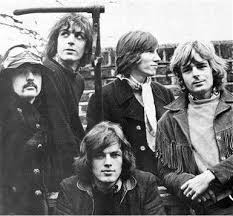
Space Rock, Psychedelia, Progressive Rock, Classic Rock...however you want to categorize them at different stages of their career, the enigmatic Pink Floyd has made a huge mark on rock and roll. One of the most successful purveyors of the "concept album" (in fact, a majority of their records are at least loosely conceptual), they certainly had ambition. And mostly the talent to pull it off, featuring three visionary musicians at different times. There was cult figure/acid casualty Syd Barrett, dystopia-obsessed conceptualist Roger Waters and one of the great melodic guitarists, David Gilmour. Richard Wright often gets forgotten in the mix, but he made crucial contributions as well and his majestic keyboards held it all together. (And Nick Mason played some unremarkable drums, although he has the distinction of being the only member to have played on every one of their albums).
The Piper at the Gates of Dawn (1967) *****
Is this the greatest psychedelic record ever made? It is definitely in the conversation. The only record to feature brilliant cult figure Syd Barrett (he has only one song on the sophomore effort), TPATGOD is Barrett's lasting legacy, and its strengths reflect his creative genius and descent into mental illness simultaneously. That is key to TPATGOD's success, its childlike lyrics from Barrett are underpinned by an off kilter psychedelic musical backdrop that is exciting but that also has an undercurrent of unease and darkness.
London '66/'67 (EP) (1966/1967/1995) ***
This EP contains two lengthy, tripped out psychedelic jams that were recorded but not used for a film that was made to depict trippy late-60's London. Mainly for Barrett completists, it is as close as you will probably get to hearing the Barrett-era's legendary spaced-out live shows.
Saucerful of Secrets (1968) ***
SOS is a triumph in that it is any good at all. Actually, it is quite good in spots. Imagine being Waters, Wright and Mason after TPATGOD put you on the forefront of the psychedelic vanguard, and then your visionary bandleader/lyricist/guitarist/lead singer (Syd Barrett) goes loony and cannot function anymore. First, you get lucky in picking up a new guitarist who can also share the singing load by the name of David Gilmour. That was certainly fortunate. It is also fortunate that Waters was able to step forward in the lyrics department, and all of the band members (save Mason) proved to be able songwriters. They were trying to keep their original Pink Floyd sound sans Barrett's indispensable help, but some of these songs do stand out, especially the spooky "Set the Controls For the Heart of the Sun" and "Remember a Day." Barrett was still ostensibly in the band, but he was only able to contribute one song, the farewell "Jugband Blues."
'More' (soundtrack) (1969) **
Soundtrack to a forgotten film that begins a pretty unfocused period for Pink Floyd, a period of floundering where they needed a post-Barrett sound but hadn't really found it yet.
Ummagumma (part live, part studio) (1969) **
Tough to rate, because the live record in this double is quite good and worthwhile, while the studio record is one of my least favorite stretches of music I've ever heard from a band that I otherwise really like. The live portion is four extended tunes that maintain a creepy psychedelic mood with exciting improvisation. The studio is a self-indulgent mess, where each of the band members is given half a side for their own solo experimentation. Most of it is damn near unlistenable.
Atom Heart Mother (1970) *1/2
The last entry in this rather unfocused early period, even the band dismisses this record. I had a student two years ago who swore by AHM, and we had many a discussion where he tried to convince me of the hidden brilliance therein and I tried to explain how crappy this record is. At least I had the band themselves on my side of the argument. While there are a couple of good tunes here ("Summer '68" and "If" are the standouts), it is dominated by two extended pieces. The sidelong title track features sections with such titles as 'Breast Milky' and 'Funky Dung.' Closer "Alan's Psychedelic Breakfast" is 13 minutes of sound effects.
Relics (compilation) (1971) ****
A somewhat randomly selected compilation. While it misses some important tracks, it is primarily valuable because for a long time it was the only place to get some of the brilliant Syd Barrett single-only releases, like "Arnold Layne" (the cross dressing tale that started it all) and "See Emily Play," which is one of the great psychedelic singles of the 60's. There are also some album tracks and great b-sides here. So while not a definitive compilation of the era, it remains a fantastic listen in its own right.
Meddle (1971) *****
The classic Pink Floyd sound starts here. Something clicked and they finally found a post-Syd Barrett identity. Somewhat overshadowed by Dark Side of the Moon, Meddle is a revelation once you listen to it. Part of what I enjoy about it is that there are some lighter moments that are few and far between from here on out where Roger Waters dominates the lyrics and concepts. "Seamus" is a rare Floyd blues about one of the band members' dog, and "San Tropaz" is a cheeky cocktail jazz number. "One of These Days" is as hard driving as Floyd gets, and "Fearless" should have become one of their better known numbers. But the record really rests on the 23 minute "Echoes," which stands as their greatest achievement. All of the elements are in place: the languid pace, killer melodic guitar from Gilmour, dark lyrics from Waters and enveloping and enticing mood that is set and maintained for an entire album side.
Obscured By Clouds (soundtrack) (1972) **
Soundtrack from an obscure French film. Some of this is good, but it does sound like a soundtrack. "Free Four" was a catchy single, and the title track is cool mood music.
Dark Side of the Moon (1973) *****
Not much I can add that hasn't already been said on this one. A landmark in progressive rock and rock music in general, remaining on the charts for 741 weeks (that's 1973-1988), what is perhaps most impressive about this seamless hunk of space rock is that it still sounds fresh and interesting, although you have probably heard it several hundred times.
ABOVE: The Dark Side of the Rainbow. Pink Floyd fans have long known about the supposed synchronicity between the film 'The Wizard of Oz' and DSOTM. Google it and find where to exactly start it, but the idea is that if you watch the film with the volume down and instead listen to DSOTM, they line up for fantastic effect. I tried it with a friend of mine once, and it was pretty cool in parts. "Great Gig in the Sky" works great with the tornado scene, and the munchkins do appear to be dancing to the beat of "Money." People have compiled long lists of where they supposedly correspond both musically and lyrically. The band has said it is purely coincidental.
Wish You Were Here (1975) *****
A loose concept album about Syd Barrett and the cold machine of the music industry in general, Rick Wright and David Gilmour both cited this as their favorite Floyd record. Opening with the majestic ode to Barrett featuring some of Gilmour's most lyrical playing, "Shine On You Crazy Diamond," the record then moves into typically bitter Waters territory with "Welcome To the Machine" and "Have a Cigar," which makes reference to the supposedly true story of some record company suit who met the band and asked the question, "so, which one's Pink?" The title track may be their prettiest and most heartfelt song. Another story that has been oft told about these sessions is that an unrecognizable Syd dropped by the studio to pay a visit to his former comrades. He was completely out of it and unaware that they happened to be making a record about him.
Animals (1977) ****
The peak of Roger Waters's nihilism and dystopian lyrical visions, Animals does indeed paint a bleak picture of society, dividing the people into Orwellian categories, with song titles like "Dogs," "Pigs" and "Sheep." As usual it is Gilmour and Wright's musical contributions that save the record and balance Waters's lyrical darkness with some musical warmth (a key balance in all of the best post-Barrett Floyd).
The Wall (1979) ****
Is Anybody Out There?: The Wall Live 1980-81 (live) (1980-81/2000) ****
The Wall and The Final Cut have Waters dominating the band. The Wall is his bitter ruminations on isolation and rock star madness, with the symbol of a wall separating the lonely rock star and his audience (as well as some stuff on fascist politics). To his credit, Waters makes it work, but much of the music serves the primary purpose of moving the concept forward vs. working as standalone rock music. That being said, the real songs rank amongst their best ("Another Brick in the Wall, Pt. II," "Mother," "Goodbye Blue Skies," "Young Lust," "Hey You," "Comfortably Numb" and "Run Like Hell"), and it is also notable that most of the great songs were co-written with Gilmour. "Comfortably Numb" may be their most famous song, and it fittingly is also one of their best and shows the band's qualities in the most favorable light. With Waters singing/talking the verses and Gilmour taking the majestic choruses, as well as some of Gilmour's most inspired playing, it is Pink Floyd in a nutshell. I personally prefer the live ITAOT version of The Wall, it's got a bit more muscle, and it is fun to hear Waters actually have to deal with the live audience that the record shows so much disdain for. His sarcastic exhortations at the beginning of "Run Like Hell" are worth the price of admission, as he barks like a mad dictator..."Clap your hands! Come on! Have a good time!! Enjoy yourselves!!"...he sounds anything but inviting.
The Final Cut (1983) ***
Waters takes a strand of The Wall and runs with it on what he intended to be Floyd's final record (Gilmour and co. had other ideas, though). With minimal participation from the others (Wright had left/been kicked out, and Gilmour and Mason acted as little more than session men), this is for all intents and purposes a Waters solo record. With little melody or variation, the lyrics are clearly the focus, as Waters sings about his father's death in World War II, and then takes on Thatcher's England and anti-war matters in general. Not for the casual fan, but it was never meant to be. Very interesting, but you have to have patience and give it attention. After TFC Waters called Floyd "a spent force" and declared its demise. David Gilmour did not agree...
ABOVE: One of the concepts that failed was a project they were going to call Household Objects. As the name suggests, they were going to make an entire album using only kitchen and household items for instruments. After months of experimentation, they dropped it, as Gilmour glibbly remarked, they decided that they could get the sounds they wanted better with, you know, guitars, keyboards and stuff.
A Momentary Lapse of Reason (1987) **
Delicate Sound of Thunder (live) (1988) ***
The Division Bell (1994) ***
Pulse (live) (1995) **
The Endless River (1993/2014) **
To Waters's angry surprise, Gilmour decided to continue on without him. Hence one of the most bitter and public band spats commenced, with barbs exchanged in the press and Waters's unsuccessful lawsuit to prevent the other three from touring and recording under the Pink Floyd banner. As TFC was really a Roger Waters solo record, A Momentary Lapse of Reason was really a solo David Gilmour project, with Gilmour later admitting that he included Mason and Wright more to bolster his legal claim to the Pink Floyd name in the face of Waters's lawsuit vs. using their musical input. I've got a soft spot for AMLOR, but I also have to admit that it is not very good (although "Learning To Fly" is a fantastic single). Gilmour has also been candid about the fact that AMLOR suffers lyrically from Waters's absence, and that is indeed its primary weakness. Division Bell is quite a bit better and has the loose concept of communication to hold it together, but more crucially it is more of a band record, with Rick Wright especially more of a full participant, co-writing five tunes with Gilmour and even taking the lead vocal on the excellent "Wearing the Inside Out." It got lukewarm reviews on release, but has gained a substantial cult following over the years. If you are a fan of Gilmour's guitar playing, every track features some tasty cuts of Gilmour guitar. The live records aren't so much bad as pointless.
Selected Compilations:
A Collection of Great Dance Songs (compilations) (1981) ** is most notable for its wonderfully ironic title (and cover), but it is far from definitive and fairly useless. Echoes: The Best of Pink Floyd (compilation) (2001) ***** is a fantastic double disc collection, and actually takes on a character of its own with its thematic, non-chronological track listing, as well as some creative editing. If you want a more manageable single disc collection, I guess The Best of Pink Floyd: A Foot in the Door (compilation) (2011) **** does the trick, but remember that they are so concept oriented, that it is extremely difficult to effectively distill them into a compilation. Note that in 2011, they remastered their catalogue (again) and re-released their records, with DSOTM, WYWH and The Wall also being released in deluxe sets with loads of extras.
Bottom Line: Piper at the Gates of Dawn is must have psychedelia, as are some of their early Syd Barrett singles (get "See Emily Play" somehow, some way). 1971-79 Pink Floyd is one of the most impressive streaks of any rock band and is all pretty essential stuff.
The Piper at the Gates of Dawn (1967) *****
Is this the greatest psychedelic record ever made? It is definitely in the conversation. The only record to feature brilliant cult figure Syd Barrett (he has only one song on the sophomore effort), TPATGOD is Barrett's lasting legacy, and its strengths reflect his creative genius and descent into mental illness simultaneously. That is key to TPATGOD's success, its childlike lyrics from Barrett are underpinned by an off kilter psychedelic musical backdrop that is exciting but that also has an undercurrent of unease and darkness.
London '66/'67 (EP) (1966/1967/1995) ***
This EP contains two lengthy, tripped out psychedelic jams that were recorded but not used for a film that was made to depict trippy late-60's London. Mainly for Barrett completists, it is as close as you will probably get to hearing the Barrett-era's legendary spaced-out live shows.
Saucerful of Secrets (1968) ***
SOS is a triumph in that it is any good at all. Actually, it is quite good in spots. Imagine being Waters, Wright and Mason after TPATGOD put you on the forefront of the psychedelic vanguard, and then your visionary bandleader/lyricist/guitarist/lead singer (Syd Barrett) goes loony and cannot function anymore. First, you get lucky in picking up a new guitarist who can also share the singing load by the name of David Gilmour. That was certainly fortunate. It is also fortunate that Waters was able to step forward in the lyrics department, and all of the band members (save Mason) proved to be able songwriters. They were trying to keep their original Pink Floyd sound sans Barrett's indispensable help, but some of these songs do stand out, especially the spooky "Set the Controls For the Heart of the Sun" and "Remember a Day." Barrett was still ostensibly in the band, but he was only able to contribute one song, the farewell "Jugband Blues."
'More' (soundtrack) (1969) **
Soundtrack to a forgotten film that begins a pretty unfocused period for Pink Floyd, a period of floundering where they needed a post-Barrett sound but hadn't really found it yet.
Ummagumma (part live, part studio) (1969) **
Tough to rate, because the live record in this double is quite good and worthwhile, while the studio record is one of my least favorite stretches of music I've ever heard from a band that I otherwise really like. The live portion is four extended tunes that maintain a creepy psychedelic mood with exciting improvisation. The studio is a self-indulgent mess, where each of the band members is given half a side for their own solo experimentation. Most of it is damn near unlistenable.
Atom Heart Mother (1970) *1/2
The last entry in this rather unfocused early period, even the band dismisses this record. I had a student two years ago who swore by AHM, and we had many a discussion where he tried to convince me of the hidden brilliance therein and I tried to explain how crappy this record is. At least I had the band themselves on my side of the argument. While there are a couple of good tunes here ("Summer '68" and "If" are the standouts), it is dominated by two extended pieces. The sidelong title track features sections with such titles as 'Breast Milky' and 'Funky Dung.' Closer "Alan's Psychedelic Breakfast" is 13 minutes of sound effects.
Relics (compilation) (1971) ****
A somewhat randomly selected compilation. While it misses some important tracks, it is primarily valuable because for a long time it was the only place to get some of the brilliant Syd Barrett single-only releases, like "Arnold Layne" (the cross dressing tale that started it all) and "See Emily Play," which is one of the great psychedelic singles of the 60's. There are also some album tracks and great b-sides here. So while not a definitive compilation of the era, it remains a fantastic listen in its own right.
Meddle (1971) *****
The classic Pink Floyd sound starts here. Something clicked and they finally found a post-Syd Barrett identity. Somewhat overshadowed by Dark Side of the Moon, Meddle is a revelation once you listen to it. Part of what I enjoy about it is that there are some lighter moments that are few and far between from here on out where Roger Waters dominates the lyrics and concepts. "Seamus" is a rare Floyd blues about one of the band members' dog, and "San Tropaz" is a cheeky cocktail jazz number. "One of These Days" is as hard driving as Floyd gets, and "Fearless" should have become one of their better known numbers. But the record really rests on the 23 minute "Echoes," which stands as their greatest achievement. All of the elements are in place: the languid pace, killer melodic guitar from Gilmour, dark lyrics from Waters and enveloping and enticing mood that is set and maintained for an entire album side.
Obscured By Clouds (soundtrack) (1972) **
Soundtrack from an obscure French film. Some of this is good, but it does sound like a soundtrack. "Free Four" was a catchy single, and the title track is cool mood music.
Dark Side of the Moon (1973) *****
Not much I can add that hasn't already been said on this one. A landmark in progressive rock and rock music in general, remaining on the charts for 741 weeks (that's 1973-1988), what is perhaps most impressive about this seamless hunk of space rock is that it still sounds fresh and interesting, although you have probably heard it several hundred times.
ABOVE: The Dark Side of the Rainbow. Pink Floyd fans have long known about the supposed synchronicity between the film 'The Wizard of Oz' and DSOTM. Google it and find where to exactly start it, but the idea is that if you watch the film with the volume down and instead listen to DSOTM, they line up for fantastic effect. I tried it with a friend of mine once, and it was pretty cool in parts. "Great Gig in the Sky" works great with the tornado scene, and the munchkins do appear to be dancing to the beat of "Money." People have compiled long lists of where they supposedly correspond both musically and lyrically. The band has said it is purely coincidental.
Wish You Were Here (1975) *****
A loose concept album about Syd Barrett and the cold machine of the music industry in general, Rick Wright and David Gilmour both cited this as their favorite Floyd record. Opening with the majestic ode to Barrett featuring some of Gilmour's most lyrical playing, "Shine On You Crazy Diamond," the record then moves into typically bitter Waters territory with "Welcome To the Machine" and "Have a Cigar," which makes reference to the supposedly true story of some record company suit who met the band and asked the question, "so, which one's Pink?" The title track may be their prettiest and most heartfelt song. Another story that has been oft told about these sessions is that an unrecognizable Syd dropped by the studio to pay a visit to his former comrades. He was completely out of it and unaware that they happened to be making a record about him.
Animals (1977) ****
The peak of Roger Waters's nihilism and dystopian lyrical visions, Animals does indeed paint a bleak picture of society, dividing the people into Orwellian categories, with song titles like "Dogs," "Pigs" and "Sheep." As usual it is Gilmour and Wright's musical contributions that save the record and balance Waters's lyrical darkness with some musical warmth (a key balance in all of the best post-Barrett Floyd).
The Wall (1979) ****
Is Anybody Out There?: The Wall Live 1980-81 (live) (1980-81/2000) ****
The Wall and The Final Cut have Waters dominating the band. The Wall is his bitter ruminations on isolation and rock star madness, with the symbol of a wall separating the lonely rock star and his audience (as well as some stuff on fascist politics). To his credit, Waters makes it work, but much of the music serves the primary purpose of moving the concept forward vs. working as standalone rock music. That being said, the real songs rank amongst their best ("Another Brick in the Wall, Pt. II," "Mother," "Goodbye Blue Skies," "Young Lust," "Hey You," "Comfortably Numb" and "Run Like Hell"), and it is also notable that most of the great songs were co-written with Gilmour. "Comfortably Numb" may be their most famous song, and it fittingly is also one of their best and shows the band's qualities in the most favorable light. With Waters singing/talking the verses and Gilmour taking the majestic choruses, as well as some of Gilmour's most inspired playing, it is Pink Floyd in a nutshell. I personally prefer the live ITAOT version of The Wall, it's got a bit more muscle, and it is fun to hear Waters actually have to deal with the live audience that the record shows so much disdain for. His sarcastic exhortations at the beginning of "Run Like Hell" are worth the price of admission, as he barks like a mad dictator..."Clap your hands! Come on! Have a good time!! Enjoy yourselves!!"...he sounds anything but inviting.
The Final Cut (1983) ***
Waters takes a strand of The Wall and runs with it on what he intended to be Floyd's final record (Gilmour and co. had other ideas, though). With minimal participation from the others (Wright had left/been kicked out, and Gilmour and Mason acted as little more than session men), this is for all intents and purposes a Waters solo record. With little melody or variation, the lyrics are clearly the focus, as Waters sings about his father's death in World War II, and then takes on Thatcher's England and anti-war matters in general. Not for the casual fan, but it was never meant to be. Very interesting, but you have to have patience and give it attention. After TFC Waters called Floyd "a spent force" and declared its demise. David Gilmour did not agree...
ABOVE: One of the concepts that failed was a project they were going to call Household Objects. As the name suggests, they were going to make an entire album using only kitchen and household items for instruments. After months of experimentation, they dropped it, as Gilmour glibbly remarked, they decided that they could get the sounds they wanted better with, you know, guitars, keyboards and stuff.
A Momentary Lapse of Reason (1987) **
Delicate Sound of Thunder (live) (1988) ***
The Division Bell (1994) ***
Pulse (live) (1995) **
The Endless River (1993/2014) **
To Waters's angry surprise, Gilmour decided to continue on without him. Hence one of the most bitter and public band spats commenced, with barbs exchanged in the press and Waters's unsuccessful lawsuit to prevent the other three from touring and recording under the Pink Floyd banner. As TFC was really a Roger Waters solo record, A Momentary Lapse of Reason was really a solo David Gilmour project, with Gilmour later admitting that he included Mason and Wright more to bolster his legal claim to the Pink Floyd name in the face of Waters's lawsuit vs. using their musical input. I've got a soft spot for AMLOR, but I also have to admit that it is not very good (although "Learning To Fly" is a fantastic single). Gilmour has also been candid about the fact that AMLOR suffers lyrically from Waters's absence, and that is indeed its primary weakness. Division Bell is quite a bit better and has the loose concept of communication to hold it together, but more crucially it is more of a band record, with Rick Wright especially more of a full participant, co-writing five tunes with Gilmour and even taking the lead vocal on the excellent "Wearing the Inside Out." It got lukewarm reviews on release, but has gained a substantial cult following over the years. If you are a fan of Gilmour's guitar playing, every track features some tasty cuts of Gilmour guitar. The live records aren't so much bad as pointless.
Selected Compilations:
A Collection of Great Dance Songs (compilations) (1981) ** is most notable for its wonderfully ironic title (and cover), but it is far from definitive and fairly useless. Echoes: The Best of Pink Floyd (compilation) (2001) ***** is a fantastic double disc collection, and actually takes on a character of its own with its thematic, non-chronological track listing, as well as some creative editing. If you want a more manageable single disc collection, I guess The Best of Pink Floyd: A Foot in the Door (compilation) (2011) **** does the trick, but remember that they are so concept oriented, that it is extremely difficult to effectively distill them into a compilation. Note that in 2011, they remastered their catalogue (again) and re-released their records, with DSOTM, WYWH and The Wall also being released in deluxe sets with loads of extras.
Bottom Line: Piper at the Gates of Dawn is must have psychedelia, as are some of their early Syd Barrett singles (get "See Emily Play" somehow, some way). 1971-79 Pink Floyd is one of the most impressive streaks of any rock band and is all pretty essential stuff.
Thursday, September 12, 2013
Sometimes Airplanes Hit Buildings
“Daddy, sometimes…one time, airplanes hit buildings. Lots of people fell and got hurt. Boys and girls. The fire truck came and tried to save them. But lots of people fell out of the buildings and hit their heads and then the buildings fell down.” Apparently they were discussing 9/11 yesterday in my three year old’s pre-school class. She said it was the day’s lesson. I guess I’m OK with that, although I’m not sure what you can really explain to a three year old about all of that. All I added was that she shouldn’t really worry about it right now, because it doesn’t happen very often. (I mean, the planes flying into buildings bit). I’ll save the “al-Quada/historical U.S. intervention in the Middle East/Soviets in Afghanistan and Mujahadeen” talk for a few years down the road.
It has only been 12 years, but for her it is already just something in the history books. It will be like Vietnam is for me. Something that changed everything for my era, but yet an event of which I have no firsthand recollection. History experienced is so very different from history learned. I spend most of my waking hours talking to students about things that other people, but neither me nor my students, actually experienced.
I was covering Jamestown recently, and casually tossed out the statistic that one in eight settlers survived the first few winters (or, if you want to reverse that, 7 in 8 did not survive). Thinking about 9/11 is emotional for me when I get to that lesson at the end of the year (I’ve got three days on it, actually). But it is even more emotional I am sure for my friends who were in New York (I experienced 9/11, like most of the country, on television.) But I could talk about the hundreds who perished in Jamestown without any emotion, even make a few “starving time” jokes. Probably wasn’t all that funny to those in Jamestown, though (especially the woman whose husband murdered her and then ate her to sustain him through one of the winters…once he was discovered his fellow colonists burned him at the stake…happy times in Jamestown. from Capt. John Smith's writings: "Now whether she was better roasted, boiled, or [broiled], I know not"). Point of all of this is, I guess, that time and distance can numb almost anything. Scale can also matter, although not in the way that you might think. It reminds me of one of my favorite quotes attributed to Stalin that I start one of my lessons with: “one death is a tragedy, a million deaths is a statistic.” That’s always a great class, the quote bothers some students and sparks good discussion.
But back to 9/11 and distance, it has been interesting that each year my students remember less and less about the day and are more detached from it. When I taught it even three years ago, the students had vivid memories of being in their little elementary classes and teachers crying and great confusion. The emotion of experiencing even that was fresh for them and they still felt some personal ownership in the event, if that is the right term. This crop of students I have were four or five years old on the day, and they remember very little. Next year or the year after, it will only be history to my students, just like it is for my daughters. Like Vietnam or The Great Depression for me. That is sort of sad, but it has been an interesting process to watch year after year.
Not sure where I’m going with all of this, I started out just wanting to comment on a lesson on 9/11 being given to a pre-school class.
Another teaching related thing that was cool, I had just finished teaching about John Winthrop, the Puritans and Massachusetts, and analyzing Winthrop's famous “city upon a hill” sermon as the birth of American exceptionalism. Then Obama gives his Syria speech the other night and closes saying that he does believe that America is “exceptional” (he used the actual word!) and has a special responsibility to the world. Then Putin writes his op-ed/open letter to America piece in the NY Times, and closes with telling us that we are not exceptional at all. Thank you Barack and Vlad for making my lesson relevant! And by the way, it shows just how inept the Obama administration has been on Syria when former KGB thug Vladimir Putin (Chechnya? Georgia, anyone?) can present himself as peacemaker and the U.S. as imperialist aggressor.
ABOVE: Putin is enjoying scoring easy points against Obama
It has only been 12 years, but for her it is already just something in the history books. It will be like Vietnam is for me. Something that changed everything for my era, but yet an event of which I have no firsthand recollection. History experienced is so very different from history learned. I spend most of my waking hours talking to students about things that other people, but neither me nor my students, actually experienced.
I was covering Jamestown recently, and casually tossed out the statistic that one in eight settlers survived the first few winters (or, if you want to reverse that, 7 in 8 did not survive). Thinking about 9/11 is emotional for me when I get to that lesson at the end of the year (I’ve got three days on it, actually). But it is even more emotional I am sure for my friends who were in New York (I experienced 9/11, like most of the country, on television.) But I could talk about the hundreds who perished in Jamestown without any emotion, even make a few “starving time” jokes. Probably wasn’t all that funny to those in Jamestown, though (especially the woman whose husband murdered her and then ate her to sustain him through one of the winters…once he was discovered his fellow colonists burned him at the stake…happy times in Jamestown. from Capt. John Smith's writings: "Now whether she was better roasted, boiled, or [broiled], I know not"). Point of all of this is, I guess, that time and distance can numb almost anything. Scale can also matter, although not in the way that you might think. It reminds me of one of my favorite quotes attributed to Stalin that I start one of my lessons with: “one death is a tragedy, a million deaths is a statistic.” That’s always a great class, the quote bothers some students and sparks good discussion.
But back to 9/11 and distance, it has been interesting that each year my students remember less and less about the day and are more detached from it. When I taught it even three years ago, the students had vivid memories of being in their little elementary classes and teachers crying and great confusion. The emotion of experiencing even that was fresh for them and they still felt some personal ownership in the event, if that is the right term. This crop of students I have were four or five years old on the day, and they remember very little. Next year or the year after, it will only be history to my students, just like it is for my daughters. Like Vietnam or The Great Depression for me. That is sort of sad, but it has been an interesting process to watch year after year.
Not sure where I’m going with all of this, I started out just wanting to comment on a lesson on 9/11 being given to a pre-school class.
Another teaching related thing that was cool, I had just finished teaching about John Winthrop, the Puritans and Massachusetts, and analyzing Winthrop's famous “city upon a hill” sermon as the birth of American exceptionalism. Then Obama gives his Syria speech the other night and closes saying that he does believe that America is “exceptional” (he used the actual word!) and has a special responsibility to the world. Then Putin writes his op-ed/open letter to America piece in the NY Times, and closes with telling us that we are not exceptional at all. Thank you Barack and Vlad for making my lesson relevant! And by the way, it shows just how inept the Obama administration has been on Syria when former KGB thug Vladimir Putin (Chechnya? Georgia, anyone?) can present himself as peacemaker and the U.S. as imperialist aggressor.
ABOVE: Putin is enjoying scoring easy points against Obama
Thursday, September 5, 2013
Bedtime Conversation
"Look at me in the eyes. Are you listening? You shouldn't say bad words. I don't like that. Today you put your head down on the table and you said 'G**dammit.' Never say that word again. Never. OK? You understand me?"-My three year old daughter to me last night as I was putting her to bed
Friday, August 30, 2013
Dez Record Guides: The Band
Something I said about CSNY awhile back also applies to The Band. Their reputation really rests on their first two phenomenal records. Everything that came after, and there was some good stuff, was viewed in the shadow of those two. The Band were always more beloved by their fellow musicians and critics than they were the general public. You don’t really hear The Band blaring from car radios very much. That’s a shame, they were such a unique group and had a profound effect on their fellow musicians. Eric Clapton has said many times that listening to The Band’s debut was one of the main reasons he broke up Cream. Their organic, earthy music that is out of time (not out of rhythm, but not of any era) hasn’t been replicated, although many have tried. The loose (to be generous) harmonies of Levon Helm, Rick Danko and Richard Manuel were the anti-CSN, yet it worked. Robbie Robertson’s economical yet always tasteful guitar work and songwriting (as much as Helm disputed Robertson’s copyrights) were the groundwork, and then add Garth Hudson’s multi-instrumental brilliance and the funkiest white rhythm section in rock (Helm and Danko), and you see why they earned the right to be simply known as The Band.
Music From Big Pink (1968) *****
From the mysterious, faceless name of the group (Robertson said they liked the name because it was both "humble and presumptuous at the same time"), to their cool factor of being the former backing group for Bob Dylan (who drew the picture on the album cover), people were already predisposed to like these guys. Yet MFBP came out of left field in 1968 and shocked everyone who heard it. It doesn’t sound shocking today because so many people since have followed their lead, but imagine this coming out in the middle of the psychedelic late 60’s. I still don’t know what “The Weight” or “Chest Fever” are even about, but they are awesome.
The Band (1969) *****
The debut was more mysterious and probably had a bigger impact, but this is their best record. From the subject matter of the songs (Civil War stories, dark rural adventures, farmer unionization) to the group photo that looks like it could have been taken in 1869 just as easily as 1969, The Band takes the listener deeper into American roots than anything I’ve ever heard. Not bad for a group of four Canadians and one Arkansas hillbilly (Helm). It is not the surface Americana that is so popular today ("let’s add some acoustic instruments, maybe a banjo or something, and then we can say we are playing roots music"). No, The Band still primarily used rock and roll instrumentation (although liberally augmented by a tuba here, a jew’s harp and mandolin there), the Americana is really in the feeling, the playing, the songwriting.
Stagefright (1970) ***
After the first two records, expectations were impossibly high. Stagefright was seen as a disappointment when it was released, but given the benefit of time and by taking it on its own more modest terms, it is a very good, although not great, record. Robertson is in firm control by this point (according to Helm it was his ruthless dictatorial nature that ruined the band democratic vibe, according to Robertson the group was starting to splinter and somebody had to step up). It is kind of ridiculous to call any record a disappointment when it includes songs like the title track, “The Shape I’m In” and “The Rumor.”
Cahoots (1971) ***
Cahoots is sort of forgotten, but it is good. I like a lot of these songs, and “Life Is a Carnival” lives up to its title with a funky and jubilant horn arrangement courtesy of Allen Toussaint, while the strange Richard Manuel/Van Morrison duet gambler tale “4% Pantomime” is a romp. (One of the more well known tunes is a cover of Dylan’s “When I Paint My Masterpiece,” but Levon Helm’s twangy singing about being in Paris…doesn’t really work for me).
Rock of Ages (live) (1972) ***1/2
A solid live set recorded on New Year’s Eve (even better now that it has been recently remastered and expanded) with some moments of greatness. The Band are in top form, and they are bolstered by a fantastic horn section with arrangements by the great Allen Toussaint. “Don’t Do It” is funky as hell.
Moondog Matinee (1973) **
Ominously, they follow a live (very good) placeholder with a record filled with covers. The well was running dry by this point. The musicianship is top notch, of course, and some of these are spirited and fun. But there is really no point.
Live at Watkins Glen (live) (1973/1995) NR
ABOVE: Performing with Bob Dylan. The Band (minus Levon Helm who took a break) backed Dylan on his first electric tour in the mid-60's. Folk purists booed Dylan and the group, but in the process the Band helped Dylan change the face of rock music.
Before the Flood (live) (with Bob Dylan) (1974) ****
Both Dylan and The Band were in slumps at this time, so why not join forces once again and try and bolster each other’s fortunes with a big tour and live record? Why not, indeed, when the results are this good. There is nothing new here, but the performances are incendiary in places, and the Dylan songs (with The Band backing him) are especially spirited.
The Basement Tapes (with Bob Dylan) (1967/1975) ***
Some time after The Band (sans Helm) had backed Dylan on his game changing electric tour in the mid-60's, Bob and the boys retreated to the woods of New York to hang out and loosely record. Before it saw official release in ’75, these sessions were perhaps the most bootlegged sessions in rock. In fact, it was the prevalence of the bootlegs that convinced the parties involved, “why the hell not, let’s put it out.” These songs are loose, fun, some are simply goofs, but with the people involved at this time in their lives, there are also some great songs here too almost by accident.
Northern Lights – Southern Cross (1975) ***
Hailed at the time of release as a triumphant return to form, I think it is merely a good record. There are some great songs that live up to their best material (the jubilant “Ophelia,” the devastating “It Makes No Difference,” which is Rick Danko’s finest vocal moment, and the Cajun historical epic “Acadian Driftwood”), but there is also a bit of well played filler here too. Part of the excitement was that it was the first set of original studio material released since 1971.
Islands (1977) *
Can you say “contract obligation?” They had already finished the huge Last Waltz project, but wanted to release it on Warner Brothers, but they still owed Capitol one more record. So with that inspiration came Islands. An odds ‘n sods collection of second rate, hastily assembled new material and leftovers.
The Last Waltz (live) (with guests) (1976/1978/2002) *****
Certainly ambitious, Robbie Robertson decided that he wanted to call it quits at least as a touring band, and so put together this final live bash, complete with Thanksgiving dinner served to the fans. He got buddy Martin Scorsese to film it, and the result is, in my view, the greatest music documentary ever made. Some of the other Band members, notably Levon Helm, did not agree with Robbie’s decision, and the tension is clear in the non-musical parts of the doc. But the chemistry is still there onstage. Helm was also angry with how Manuel and Danko were portrayed, but you can argue that they knew the cameras were rolling and that was them being them. The fragile wreck that Manuel had become is certainly sad and disturbing, and Helm never forgave Robertson or Scorsese for exploiting Manuel’s condition for their “vanity project.” Regardless, the music is exemplary, with The Band roaring through their own classics and then backing an amazing list of guests on some of their own tunes, like Bob Dylan, Neil Young, Van Morrison, Eric Clapton, Joni Mitchell, Ronnie Hawkins, Muddy Waters, Neil Diamond, Paul Butterfield, Dr. John, Bobby Charles. That list of artists is a testament to the respect The Band had from their fellow artists. Getting such cagey artists as Dylan, Young and Morrison to agree to show up for anything? I love the stories of Neil Diamond talking trash to Dylan before he went on. The expanded box set released in 2002 is the one to get.
ABOVE: Troubled Richard Manuel could sing like a soulful angel, but he was not in good shape by the time The Last Waltz was filmed and recorded.
Jericho (1993) **
High on the Hog (1996) **
Jubilation (1998) **
Richard Manuel was dead (from a 1986 suicide in a Florida motel room) and Robbie Robertson was involved in his own solo career and not on speaking terms with Levon Helm, but Helm, Rick Danko and Garth Hudson decided to carry on in the 1990’s under The Band’s moniker. The result is, as always, well played, but fairly uninteresting. The high point, by miles, is an outstanding cover of Springsteen’s “Atlantic City” that even outdoes The Boss. Danko’s death in ’99 put an official end to any future Band activity, and Helm died in 2012.
Selected Compilations:
There are several available. The only one that was released during their 70’s heyday was The Best of The Band (1976) ****, and while it is a bit short and missing a couple of essentials like “Chest Fever” and “Acadian Driftwood,” it actually flows and works really well as a piece. The Best of the Band, vol. II (1999) ** focuses exclusively on the 90’s material, and is not necessary but a good place to go if you are curious. Just download “Atlantic City” and you are fine for the 90’s. Greatest Hits (2000) ***** is a nearly perfect single disc overview (although it is missing “Twilight”). But I would recommend diving into the deep end with the box set A Musical History (2005) *****, which is everything a high end box set should be. Five discs of music, a DVD of rare performances, and a beautiful book. Nearly forty of the tracks are rare or previously unreleased, and there are some real gems in there.
Solo Work:
All of the members released solo work or collaborated with others. Robbie Robertson is the only one that I have followed extensively, and I really admire him for not trying to recreate The Band vibe. In fact, sonically, it is about as far away from the gritty, earthy sound of his former group as he could get. Instead, he went down the route of being heavily produced, using extensive programming and synthesizer work, etc. I like his first two solo records the best, Robbie Robertson (1987) **** and Storyville (1991) ***1/2. His debut opens with a gorgeous tribute to Richard Manuel, “Fallen Angel,” featuring some otherworldly harmony vocals from Peter Gabriel.
Bottom Line:
The first two records are essential in their entirety. I would also highly recommend both the film and box set for The Last Waltz. After that, you can be much more selective, Greatest Hits would fill most of the rest of the holes. Or, you can just go grab A Musical History and Last Waltz and be done with it.
Subscribe to:
Posts (Atom)