Looks like Santorum is taking both Alabama and Mississippi tonight. Logically, that means that Newt would bow out gracefully since the South should be his stronghold, but the Right Wing of the party has clearly chosen Santorum to be the Anti-Romney. But little in this primary has been logical, so Newt might still try to hang on. That is Romney's best case scenario, because Romney would have a serious challenge if he went mano-a-mano against Santorum. I'm pulling for Romney, so I hope Newt is as stubborn as I think he is. It is almost mathematically impossible for any of the other candidates to overtake Romney in delegate count, but a Santorum surge (as in, no Newt to split votes with) could prevent Romney from getting the clinching number, leading to a Republican convention that would actually mean something and be an intense battle. That would be exciting.
It is interesting to note that in the most recent national polls, Obama has dropped again and the Republicans have closed the gap that had started to widen. Is it perhaps that there have been no debates lately? Or it may be the gas prices.
I'd still put money on an Obama victory in November, but it may not be as easy as many Democrats think it will be.
Tuesday, March 13, 2012

Sunday, March 11, 2012
Dez's 5 Star Records: The Rest of the C's
Let's wrap up the C's, shall we?
Shawn Colvin – Steady On (1989): This is a great modern folk pop record that has a wonderful sonic coherence to it.
Robert Cray Band – Strong Persuader (1986): As unlikely as it would be that a blues record would be a hit in the 1980’s, Cray’s breakthrough leaned on equal parts blues and soul and most importantly, superior songwriting; this is my favorite blues record.
Creedence Clearwater Revival – Green River (1969): For a few years in the late 60’s, John Fogerty wrote Americana classics seemingly at will and at a prolific rate.
Creedence Clearwater Revival – Willy and the Poorboys (1969): CCR’s most relaxed and country-influenced album is nonetheless punctuated by the greatest protest song of the era (the blazing “Fortunate Son”) and the haunting slowburn closer, “Effigy.”
Creedence Clearwater Revival – Cosmo’s Factory (1970): CCR is firing on all cylinders here, from definitive swamp rock (“Run Through the Jungle”), back porch folk (“Lookin’ Out My Back Door”), concise blistering rock singles (“Up Around the Bend,” “Travelin’ Band”), to spot on covers (“My Baby Left Me,” “Before You Accuse Me”), winding (“I Heard It Through the Grapevine”) and focused (“Ramble Tamble”) jams and timeless protest music (“Who’ll Stop the Rain.”)
David Crosby – If I Could Only Remember My Name (1971): an apt title; The Croz delivers a beautiful, spaced out, moody gem that most people have never heard…they should, it is one of the best records from 60’s and 70’s So-Cal.
Crosby, Stills & Nash – Crosby, Stills & Nash (1969): These guys have coasted for decades on the reputation of this sparkling debut and its almost as great follow-up with Neil Young, Déjà vu.
The Cure – Disintegration (1989): Being depressed never sounded so transcendently and epically beautiful.

ABOVE: David Crosby had difficulty remembering his name and much of anything else for several decades, yet still managed to release one great record in '71
Saturday, March 10, 2012
Cuteness
It has been awhile since I posted a dose of my daughter's cuteness (other than the birthday pic below). So, here are some more recent photos...

ABOVE: Who knew balloons were so amazing?

ABOVE: She already loves soccer

ABOVE: Dressed up for Christmas Eve

ABOVE: New horse
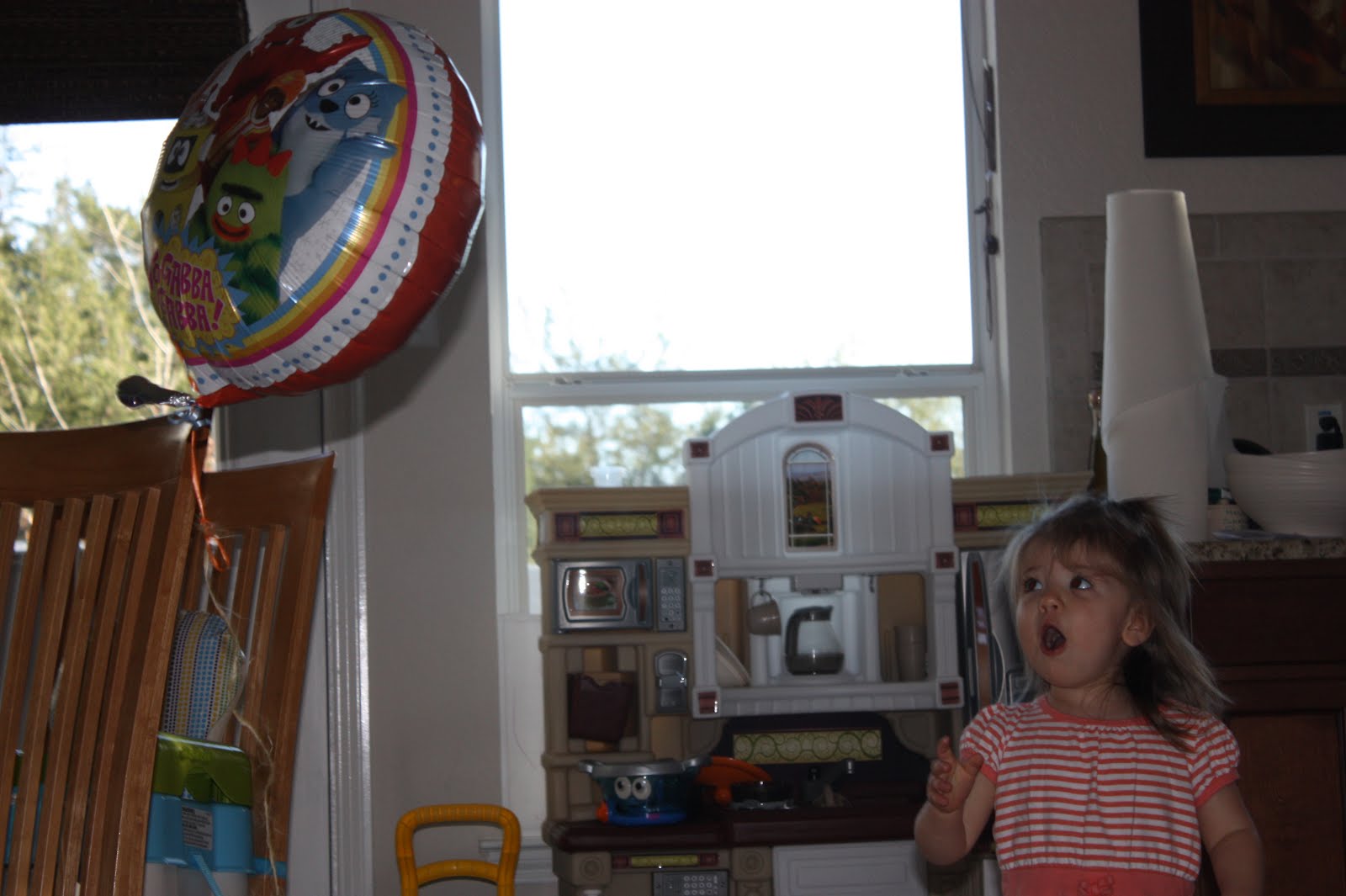
ABOVE: Who knew balloons were so amazing?

ABOVE: She already loves soccer

ABOVE: Dressed up for Christmas Eve

ABOVE: New horse
Thursday, March 8, 2012
Dez's Five Star Records, vol. IV: C's, pt. 1
I've got about 16 Five Star records under "C", so I'll split it up into two posts for easier digestion. Here's the first half. By the way, I have always been a Comments whore, so I appreciate it when you comment, whether you agree or disagree. One of the primary purposes of these lists is to foster discussion.
J.J. Cale – Naturally (1972): Turning laidback into an art form, respected songwriter J.J. Cale’s debut is a breezy, groovy delight.
CAN – Future Days (1973): One of the most influential chill-out records of all time pulls off the rare feat of making ambient-like music sound interesting.
The Cars – The Cars (1978): Ric Ocasek once half-joked that The Cars’s debut should have been titled “Greatest Hits”; every song here either was or could have been one.
The Cars – Candy-O (1979): While the debut and Heartbeat City get most of the airplay, the quirky and dark sophomore effort is my personal favorite, a sleek and dangerous ride through 80’s nightlife.
Nat ‘King’ Cole – The Christmas Song (1961): The warmest and most lovely holiday record ever recorded by miles; each holiday season, as part of my ritual, I put this record on from start to finish to officially begin the season and it hardly ever stops playing until the holidays are done. It sounds like a mythical American place that probably never existed, but where family is the center of life and the holidays bring genuine cheer and goodwill. (I know, that’s two sentences).
Coldplay – Viva la Vida or Death and All His Friends (2008): Pop/rock’s current kings release their most realized and assured album brimming with hooks and soaring choruses.
John Coltrane – A Love Supreme (1965): Jazz improvisation as prayer.
Counting Crows – August and Everything After… (1993): Notwithstanding Adam Duritz’s whine, this auspicious debut heralded an exciting and new band that referenced the past but also had its own things to say…too bad they subsequently failed to deliver on this promise.

ABOVE: Look, he's even got the perfect Christmas sweater.
Tuesday, March 6, 2012
Dez Reviews Bruce Springsteen's Wrecking Ball, 2012

You know, I've got to hand it to the aging Boss for still trying. Taking the long view of his career, his classic period really ended in the mid-80's with Born in the USA. Since then, it has been more about great moments or great songs interspersed amongst mediocre ones. That trend continues here. After being lost in the wilderness in the 90's, Bruce found his footing again in 2002 with The Rising. But even though he has been solid since, he has only been solid. Not classic. The fact that Rolling Stone magazine gave its five star stamp to this is absurd. I'm a Bruce fan, but this album getting the highest possible rating? Come on. That is diminishing his actual classics, which stand as some of the all time great rock and roll records. This does not. But it's not bad.
As I said, Bruce is trying here. He dabbles with several styles, most prominently mixing his recent midtempo rock sound with elements of Celtic acoustic, a la his Seeger Sessions work from a few years ago. It can be sometimes an awkward mix, sometimes interesting. There are also dashes of gospel, country, folk...even some drum loops and an ill-advised rap (performed by Michelle Moore) in the middle of an otherwise nice number, "Rocky Ground." (Don't worry, it is not as bad as it sounds like it would be, but rap on a Springsteen album? No.) He's teamed with a new producer, Ron Aniello, and I admire their kitchen sink approach.
Lyrically, though, the record is somewhat vague in places. Bruce was inspired by the Occupy Wall Street movement here, and he throws his usual populist/working man phrases around with vigor and apparent anger, but it is just not specific enough. I wish he could bring the lyrical detail of Nebraska or Ghost of Tom Joad to a full rock record. Now that would be something.
There is some great stuff here, though. Two real modernday Boss anthems, in fact. One is the wonderful title track (which is a tune that he's had laying around since 2007). It is a rousing, nostalgic, defiant tribute to Giants Stadium, where he played many times. Here he does have some great lines: "I was raised outta steel / Here in the swamps of Jersey / Some misty years ago / Through the mud and the beer / The blood and the cheers / I've seen champions come and go / So if you've got the guts, mister / Yeah, if you got the balls / If you think it's your time / Then step up to the line / And bring on your wrecking ball."
The second is a tune that he's had since about 2000 and which was released on a live record around that time. But here he really gives "Land of Hope and Dreams" a nuanced and interesting arrangement, mixing the rock of E Street with some banjos and fiddles pretty seemlessly. It is also appropriate that the track features the deceased Clarence Clemons's last sax solo on a Springsteen record. In fact, in the liner notes, part of Springsteen's wonderful eulogy that he gave at Clarence's funeral is reproduced as a tribute to the Big Man, and it is a better piece of writing than the lyrics in any of these songs.
*** out of *****
Sunday, March 4, 2012
Dez's 5 Star Records, vol. III: The Rest of the B's
I hope that you are writing all of these five star records down and purchasing them. This music is important to keep alive as the Age of the Album comes to a close and we regress back to the 1950’s, before the concept of a full album as a whole coherent work took hold and it was all about singles. The B’s are pretty stacked, so here is part two of the 5 Star “B” records.
Big Star - #1 Record (1972): In a just universe, Alex Chilton and Chris Bell would be remembered alongside Lennon/McCartney and Jagger/Richards as one of the all time great pop/rock songwriting duos and would have released 12 records together instead of just one.
Big Star – Radio City (1974): Chilton leads the now trio Big Star through a grittier but nonetheless just as catchy set of tunes that continues to invent Power Pop.
Black Sabbath – Paranoid (1970): Might not have been the first metal record, but it set a standard that is rarely reached to this day.
David Bowie – Diamond Dogs (1974): Bowie’s coke-fueled failed attempt to create some sort of musical version of Orwell’s ‘1984’ is nonetheless still a great listen.
David Bowie – Low (1977): Half fiery, jagged song fragments and half icy atmospheric (mostly) instrumentals, Bowie’s first collaboration with Brian Eno is still his best.
Dave Brubeck Quartet – Time Out (1959): Avant-garde-like experiments with tempo and time signature also produced a handful of catchy jazz classics on one of jazz music’s biggest selling hit records.
Jack Bruce – Songs For a Tailor (1969): Cream vocalist and bass virtuoso’s debut solo album is much more interesting than anything Clapton ever put out.
Buffalo Springfield – Again (1967): Where Stephen Stills reaches his peak with two of his greatest performances and we discover that Neil Young is a rock and roll genius (this is one of those records where the great half is so brilliant that it carries the weaker half).
Paul Butterfield Blues Band – East-West (1966): Doomed guitarist Michael Bloomfield’s shining achievement is the monumental title track, a tune that breaks through musical barriers and invents the great rock and roll jam (and the rest is simply Chess produced blues that never takes the foot off the gas).
The Byrds – Mr. Tambourine Man (1965): Folk rock is born (and God was Gene Clark great).
The Byrds – Fifth Dimension (1966): Folk rock, meet psychedelia. Psychedelia, meet folk rock (contains what, to me, is the greatest single of the 1960's: "Eight Miles High").
The Byrds – The Notorious Byrd Brothers (1968): Amidst much turmoil and band squabbling, The Byrds create their most serene and beautiful record.

ABOVE: There was a time, a long time ago in a galaxy far, far away, when you could take Ozzy Osbourne seriously (right, with Black Sabbath in the 70's)
Thursday, March 1, 2012

Subscribe to:
Posts (Atom)
